

Case Study: Big Bear Terrain Parks
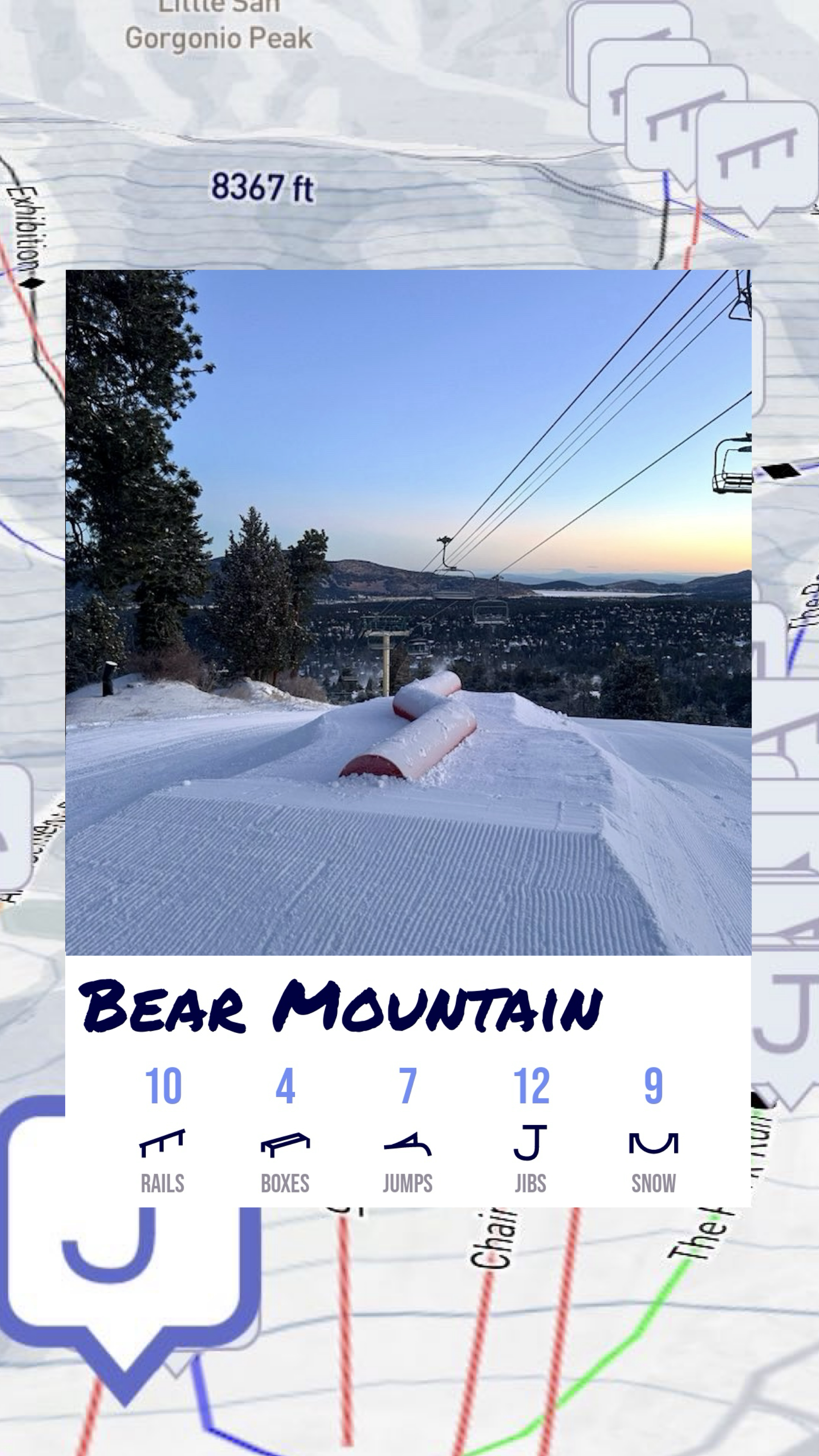
How Big Bear uses Ullr to power terrain park operations, communications, and incident management
Overview
Big Bear Mountain Resort is a giant in the world of terrain parks. Across Bear Mountain, Snow Summit, and Snow Valley, their teams operate terrain parks and bike parks at a scale and pace matched by few other resorts. At peak season, BBMR has hundreds of park features spread across multiple mountains, and the crew changes or rebuilds features nightly.
Big Bear has been using Ullr since 2021. Today, Ullr is embedded into the daily workflow of their parks program. What began as a way to document park features and logs has evolved into something more foundational: a system that connects park building, risk management, marketing and communications, guest navigation, and patrol.
For Big Bear, Ullr isn't just a park log. It's infrastructure. A source of truth that downstream teams rely on to communicate what's live on the mountain and to stand behind how those features were built and maintained.
The Challenge
Operating parks at Big Bear's scale creates challenges that go beyond tracking what features exist.
With hundreds of features across three mountains, nightly rebuilds, and both winter and summer ops, the parks team is constantly updating the product on both snow and dirt.
At the same time, multiple other teams depend on accurate park information: marketing, guest services, and ski patrol. Historically, keeping everyone aligned meant manual handoffs. Park leaders would describe what changed. Marketing teams would translate that into guest-facing updates. Patrol systems lived separately. Over time, this created friction, lag, and disconnected records.
Big Bear needed a system that could keep up with their pace, that their team would actually use as changes happened, and that could make park data accurate at the source and immediately useful everywhere else.
The Solution
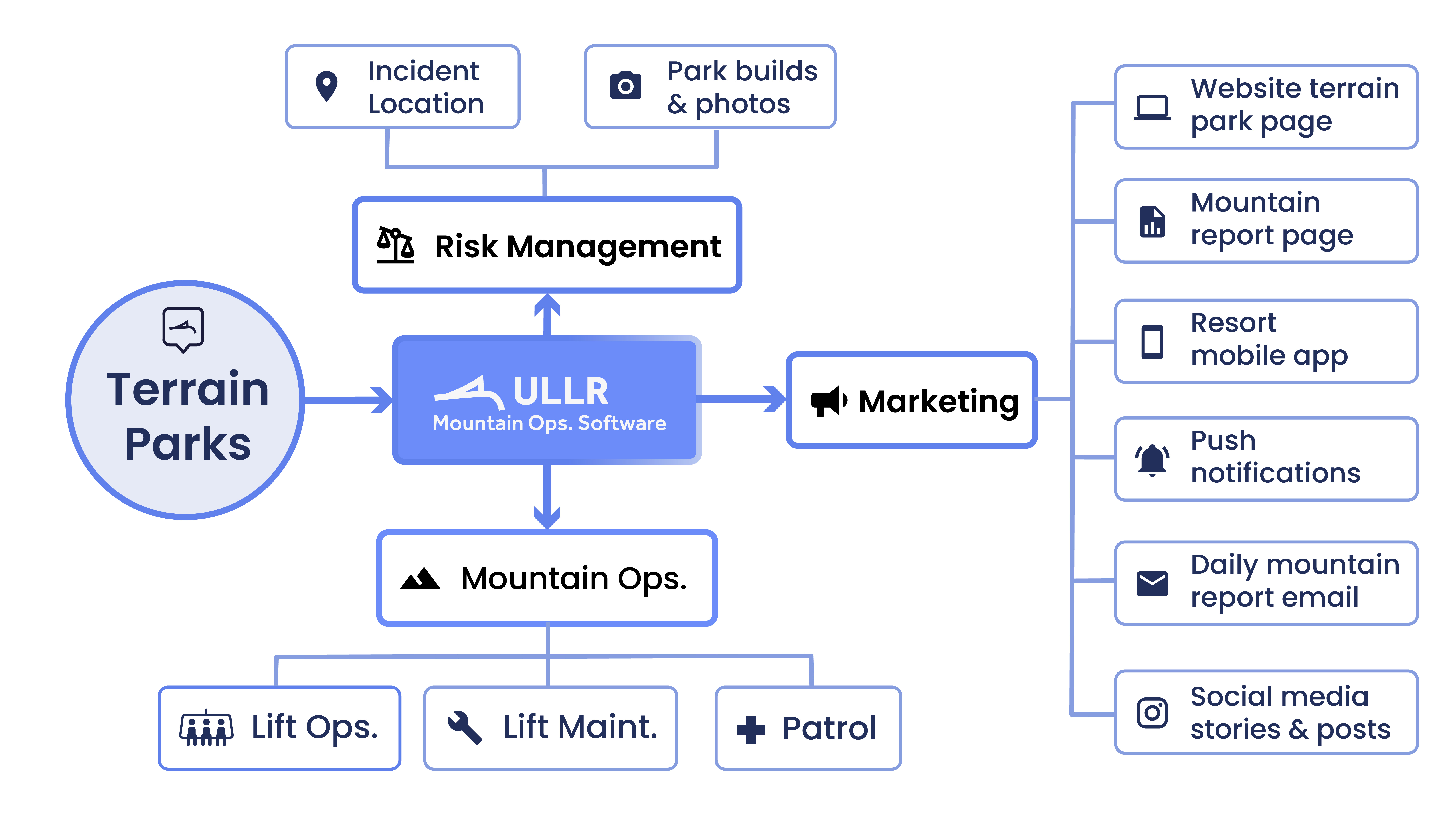
Today, Big Bear's Parks team runs its terrain park operation inside Ullr.
Ullr is where daily park work is documented: park logs, feature inspections, jump measurements, photos, and ongoing maintenance records. These workflows capture not just what features exist, but how they were built, checked, and maintained.
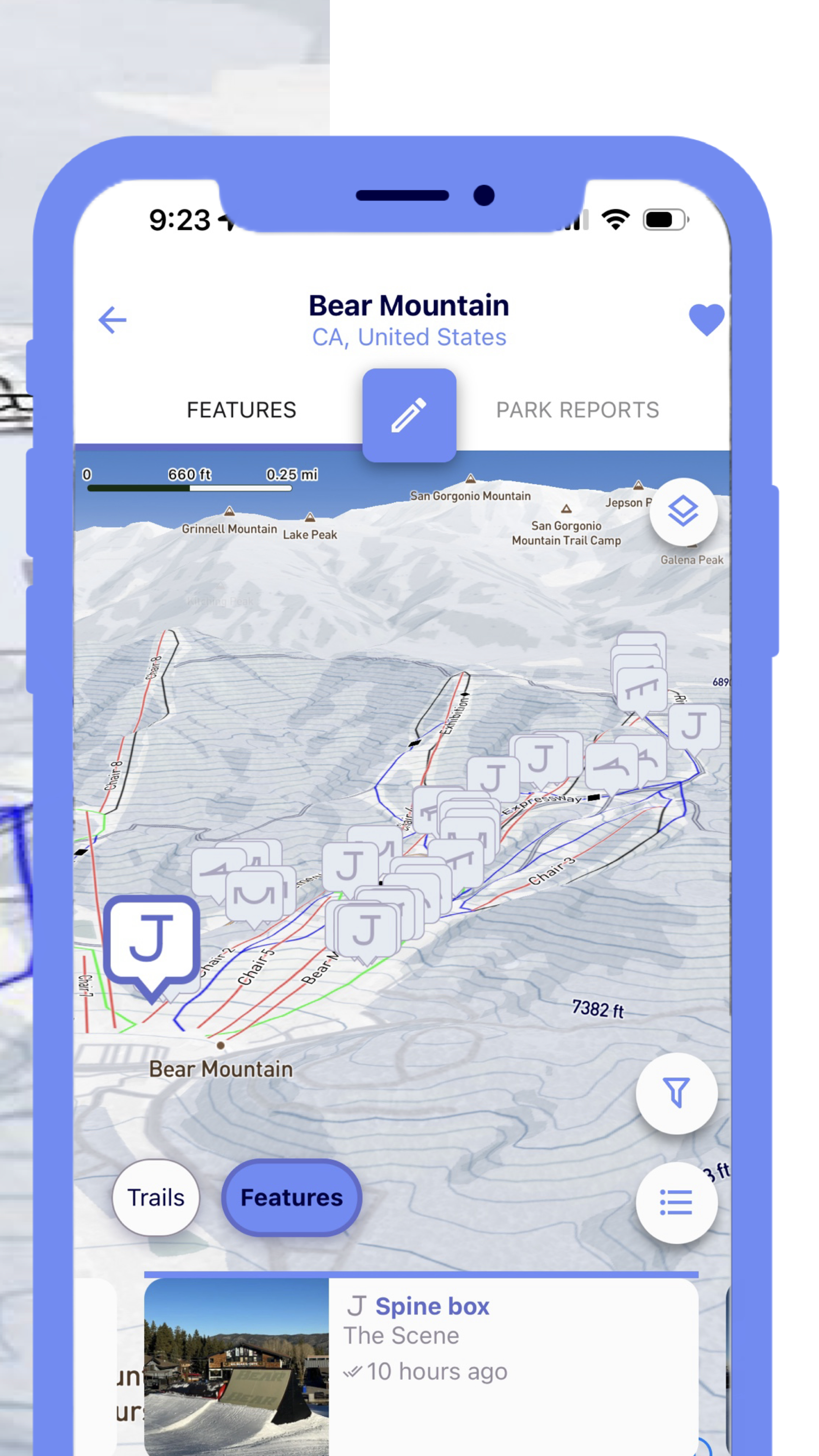
As features are built, updated, or removed, the crew records them in Ullr's park map. Each feature includes a photo, a name, and a pinned location, creating a live, visual layer of documentation. Once a park feature is live in Ullr, it becomes the source of truth for downstream systems.
- Ullr powers park maps on Big Bear's website and in their resort app through Ullr's integrations and embeddable widgets. Instead of describing parks after the fact, the crew documents them as they build. Ullr turns daily park operations into structured data that marketing teams can use, without an intermediate layer of communication or additional manual steps.
- Behind the scenes, Ullr also connects parks to patrol. Big Bear integrates Ullr's park data with their ski patrol incident management software, allowing patrol to link a specific feature directly to an incident and immediately access its location, photos, and construction and maintenance history.
For park leadership, Ullr provides real-time visibility into what's been built, what's live, and what's been documented across all three mountains.
As Ryan Wormsbecker, Terrain Park & Bike Park Director at Big Bear, described it:
It took one of the hardest parts of my job and made it seamless.
The Impact
Documentation that actually gets done
With Ullr, documentation is built directly into the workflow of the parks team.
Daily park logs, inspections, measurements, and photos are captured digitally as part of building and maintaining the parks. Information is legible, centralized, and safely stored. Features, logs, and history are easy to search, easy to pull up, and easy for managers to review across multiple mountains.
Just as importantly, the team actually wants to use it. Crews engage with the system. They take pride in what they record. Documentation is no longer a box to check at the end of a shift, it's part of how the work gets done.
Ullr doesn't just create better records. It makes documentation sustainable at Big Bear's scale.
From night builds to real-time communication
Earlier in Ryan's career, finishing a night of building meant calling marketing and leaving a message about what had changed. Today, those changes already live in Ullr.
When Big Bear's crew updates their parks, those updates automatically power park maps, apps, and guest-facing tools. Ullr has become the connective tissue between park operations and communications.
A living source of truth
Over time, Ullr became the central system Big Bear relies on for terrain park information.
Once a feature is live in Ullr, downstream teams treat it as authoritative. Marketing, digital, and operations are all working from the same dataset, pulled directly from the way the parks are built and maintained. Park data is captured once, at the source, and trusted everywhere else.
Pride, ownership, and documentation quality
One unexpected outcome has been how invested the park crew is in documenting their work.
Ryan noted that his team takes pride in their Ullr photos. Crews retake shots when visibility improves. They want their images to reflect the quality of what they built. Ullr hasn't just standardized documentation. It's made it visible and worth doing well.
Better navigation and clearer incident response
Because every feature in Ullr is mapped and categorized by size and type, guests can more easily find terrain that matches their ability. Smaller features are easier to locate. Larger parks are easier to seek out or avoid intentionally.
When incidents do occur, patrol can reference the Ullr map, find features by location and photo, and link the specific feature involved, along with its documentation history. What was once fragmented information is now a connected operational record.
Why It Matters
Big Bear's use of Ullr shows what's possible when terrain park data is treated as infrastructure.
Ullr supports nightly builds. It powers guest-facing communication. It helps guests navigate terrain. And it connects park operations directly to incident response.
At Big Bear's scale and pace, terrain parks aren't static installations. They're living systems. Ullr gives those systems a backbone.