Beyond the Waiver: How Workflow Failures Are Driving Multi-Million Dollar Verdicts in Mountain Operations
For decades, mountain operations teams operated under a comfortable legal assumption: ticket waivers and ski statute risk-assumption laws provided a shield against ski related guest injury claims.
That assumption is dead.
Recent historic jury verdicts are sending a clear signal across the industry: legal disclaimers will not save your resort from broken personnel workflows, unverified training, and paper-based operational gaps.
When an incident turns into a lawsuit, plaintiffs' attorneys no longer focus solely on the waiver. They zoom directly into your daily operational logbooks, shift handoffs, and training records. To protect your resort, mountain ops leaders must inspect where daily workflows are breaking down on the hill.
The Legal Shift Facing Mountain Ops
The belief that waivers insulate resorts from negligence claims was dismantled by two landmark Colorado cases that set new precedents for operational accountability:
1. Miller v. Crested Butte Mountain Resort
In 2022, a 16-year-old guest fell 30 feet from the Mill Paradise Express lift after failing to load properly. The lift team allegedly failed to initiate emergency stop procedures in time, resulting in catastrophic injuries. While the resort argued that signed waivers and the Colorado Ski Safety Act barred claims, courts ruled that waivers do not shield operators from liability when they fail to enforce statutory safety duties and state/ANSI B77 regulations. In late 2025, a jury held the resort responsible for $12.4 million in damages. source: Crested Butte News
2. Glenwood Caverns Haunted Mine Drop Verdict
While not ski related, in 2021 a 6-year-old child fell to her death on a drop ride. The subsequent investigation revealed that seasonal operators lacked proper training, failed to follow standard operating procedures, ignored panel error alerts, and bypassed safety interlocks. The result was an unprecedented $205 million verdict targeting systemic training and operational failures. Think mountain coasters, ziplines, and other amusement activities at your resort. source: Eleven Flo
Both of these are examples where insufficient procedures, or insufficient documentation of procedures, left operations exposed. Both cases turn on the same central issues: whether staff were properly trained and whether standard procedure was actually followed. That gap between having a procedure and being able to prove it was followed is exactly where many mountain resorts are exposed today.
Where Mountain Ops Workflows Break Down
Jurors rarely punish resorts for mechanical metal fatigue or unpreventable weather. They punish them for preventable human error and negligent oversight, or lack thereof.
In my experience, when operations teams rely on legacy systems, four major vulnerabilities open up on the mountain:
- Informal "shadow" training: High seasonal turnover and mid-season hires force supervisors to rush onboarding. Multi-page ANSI standards are often boiled down to verbal pass-downs or two-page cheat sheets. If a seasonal operator isn't verified on a specific lift or task, their work on the lift is a liability.
- Paper clipboards and lost logbooks: Pre-operational lift checklists, line checks, and ramp maintenance records completed on wet paper clipboards get lost, smudge, or lack critical detail. In court, an unreadable or missing paper log means the safety check legally never happened.
- Unmonitored lift stoppages and overrides: Operational efficiency is a metric your leadership is tracking, and the difference between a slow, button-happy operator and a genuine operational fault matters to senior leadership. Operators working under pressure often prioritize restarting the line over documenting the root cause. Unlogged stops prevent maintenance teams from spotting dangerous trend lines before a major failure occurs, and consistent documentation always produces the most accurate data.
Modernizing Ops and Compliance with Ullr
At every NSAA conference I attend, our ASDA attorneys stress the need for a stronger defense against personal injury claims. As a longtime operator, I know the administrative burden on our resorts is a constant balancing act between getting the job done and maintaining the best practices that protect the business. Ullr was built specifically for mountain operations teams to bridge the gap between high-level compliance mandates and actual on-hill execution.
1. Attributable digital logbooks and ANSI compliance
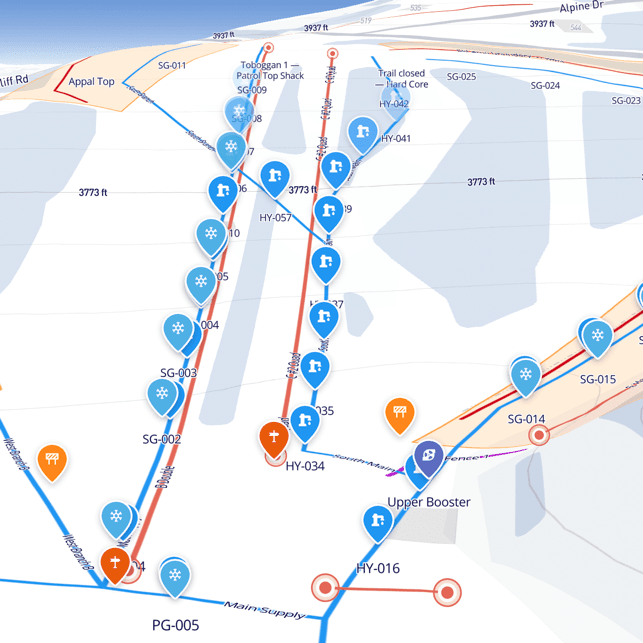
Replace soggy paper binders with ruggedized, mobile-first digital logbooks. Ullr digitizes daily pre-op lift checklists, ground prep logs, and ANSI B77.1 compliance tasks. Every check is automatically timestamped, GPS-located, and attributed to the specific crew member who completed it.
2. Instant NFC station tap-in and qualification verification
Ensure only trained staff operate your lifts. With Ullr's NFC tap-in system, operators scan their badge at the terminal during station rotations. The system instantly verifies the individual, logs the exact handoff time, and prevents unauthorized staff from taking control of a lift.
3. Immediate stoppage and fault logging
When a lift slows, stops, or faults out, operators record the event in seconds using mandatory code prompts, optional photo uploads, and notes. This eliminates guessing games, tracks mechanical trends across the mountain, and ensures maintenance is dispatched the moment an issue recurs.
4. Audit-ready mountain data
If an incident occurs, Ullr gives Mountain Operations Directors an operational time machine. Within seconds, you can export full digital records for any lift, shift, or employee, proving complete adherence to state regulations, manufacturer guidelines, and internal standards.
Protect Your Mountain Before Next Season
The era of trusting paper logs, verbal handoffs, and liability waivers to protect your mountain operations is over. Courts expect resorts to run tight, audited, and accountable digital workflows.
By digitizing daily line checks, enforcing certified station rotations, and capturing real-time lift data with Ullr, your operations team protects both the guests on your hill and the bottom line of your resort.